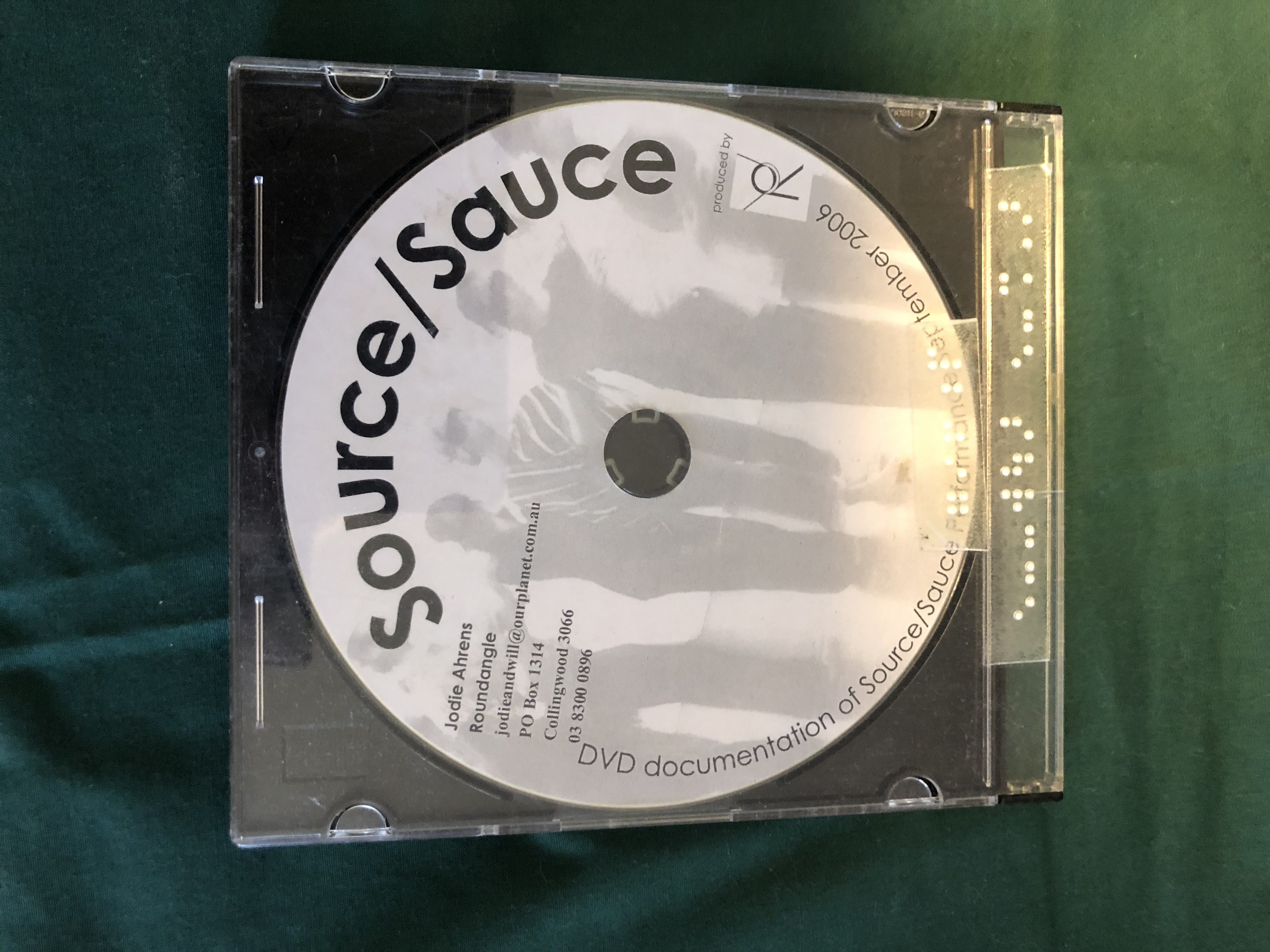
braille
-
Tech Talk 21 – Brailliant BI 20X
DBV member Taron loves the Brailliant BI 20X display and tells us why in this interview with Mark. Video and transcript below. Mark: Good morning, Taron. Taron: Hi Mark, how are you? I’m not too bad, thanks. Mark: We’re here today at DBV to talk about one particular device. Taron: The Brailliant BI 20X display. I’ve been using it for quite a few months and…

-
Tech Talk 18 – Miniguide and Tactile Watch
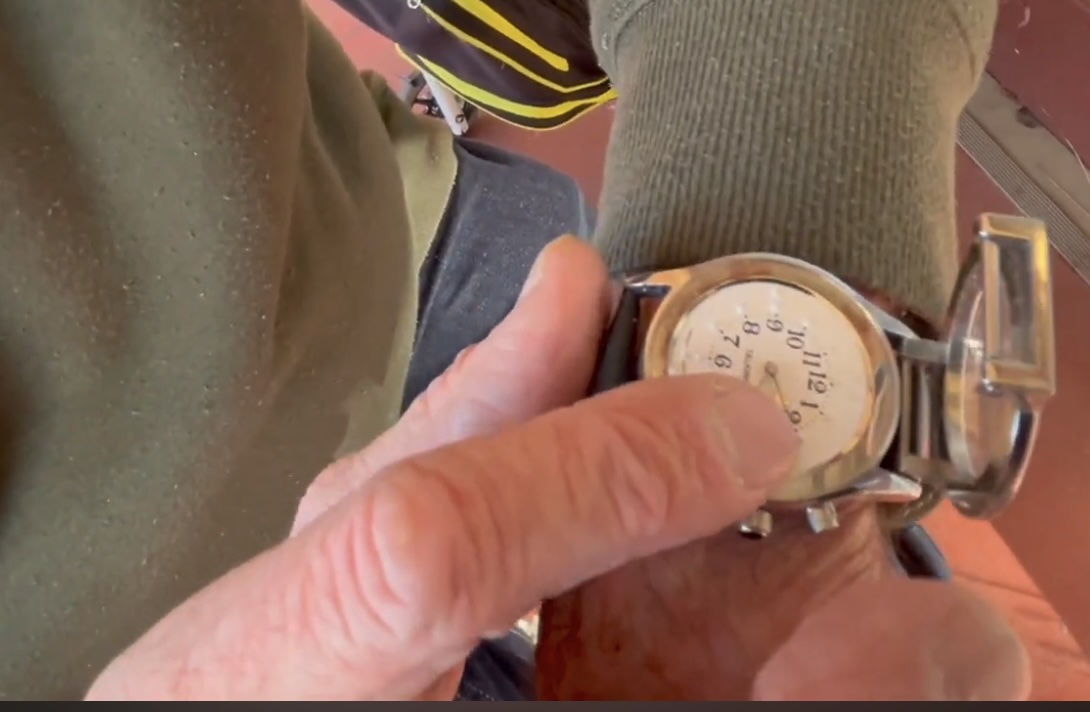
A Miniguide is a vibrating proximity sensor. Steven Hellier talks in Auslan about how he uses it to navigate the world, and shows us his analogue Braille watch, in this video. A translation is below. Steven points his Miniguide (a small device that looks like a laser pointer) at different surfaces and shows how it vibrates…
-
Getting around Melbourne: the new Metro Tunnel
The Deafblind community has been anxious to know: what will the new Metro Tunnel mean for us when it opens? We want Melbourne to be safe and accessible. At DBV Café on 24 September, we talked with Em Coy from EnAccess Maps and Alan Nargessi and Tim Fullerton from Metro Tunnel to find out more…

-
Tree of Kindness
In support of mental health month, DBV members gathered together on the 9th of October to create leaves for the Schizy Inc ‘Tree of Kindness’ at Ross House. Each person brought their unique perspective to their paper cut-out leaves with art and messages about things for good mental health that are important to them. The…

-
Deafblind tips 20 – Braille on tram/train stop button
DBV member Andrew noticed that “stop” buttons on some newer trams and buses have braille on them. Some members say these buttons are hard to find, and they prefer the cord overhead as on the older models. For more discussion about Deafblind access to public transport, see the following posts: Here is a translation of…

-
Deafblind Café September 2024 – Communication independence
As deafblind people, we are often in situations where we need to communicate with others, but we don’t have an interpreter or commguide with us: hospitals, restaurants, airports, taxis, train stations and more. We might want to ask for directions or for help. How do we communicate? At Deafblind Café on 18/9/2024, members shared their…
-
Tech Talk 9 – El Braille
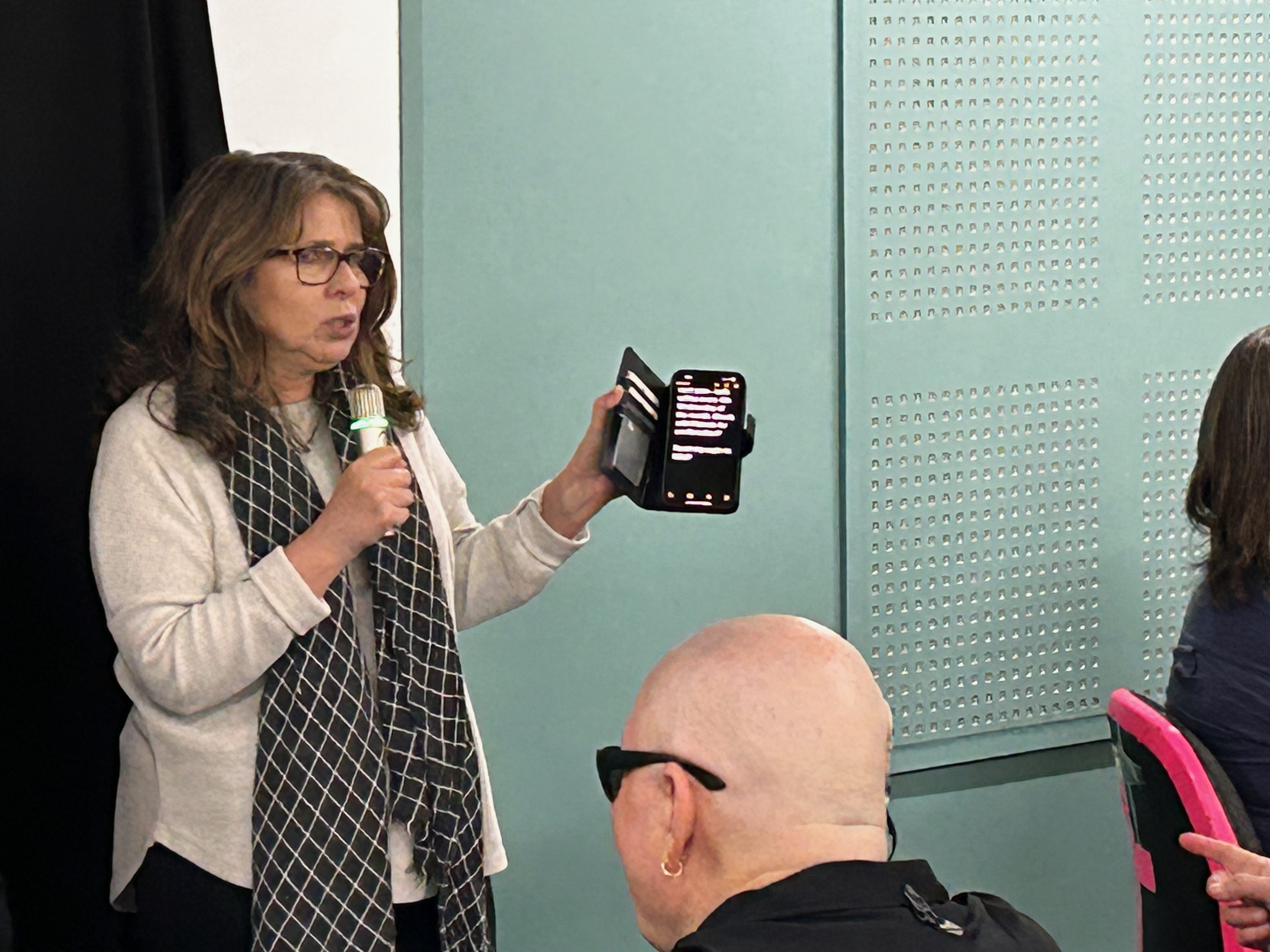
Michelle and John review the El Braille portable braille computer: Michelle: Hi, John. Welcome back to DBV! What did you think of the El Braille? John: I tried it with the Perkins style keyboard but it froze up. Then I tried connecting the El Braille to a QWERTY keyboard and it worked well, but when…

-
Deafblind workshop, Newmark Primary School
School visit for Deafblind workshop, Newmark Primary on 30th May 2024. Three of us Heather, commguide Ruth and interpreter Gen travelled by train to Williamstown to deliver a workshop to the Year 1 children, aged about 6 years old. Upon arrival, we were greeted by 30 very cute, excited children. Heather presented about her life, how she was…

-
Deafblind tips 5 – Raised dots and labels for appliances
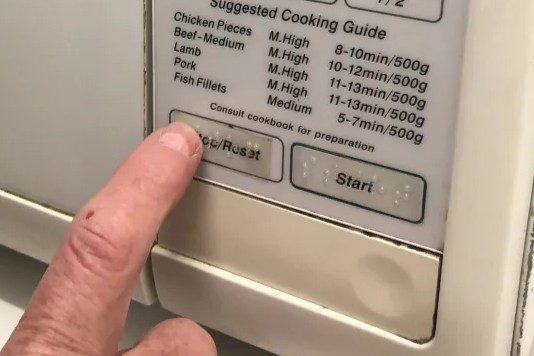
For many years I have used a microwave oven to cook or heat up food. I stick raised dots on to the screen of the microwave on top of the stop and start button. This helps me to feel which dots to press for restart or to stop cooking. Also when travelling anywhere and staying…
-
Deafblind tips 4 – Braille labels
Hello! Many years ago I was taught how to use the tool called a braille writing slate with stylus. I write by stamping any words in braille onto dymo tape then stick the label on any items. See video link to show you how to use the dymo tape tool that you can put labels…