As deafblind people, we are often in situations where we need to communicate with others, but we don’t have an interpreter or commguide with us: hospitals, restaurants, airports, taxis, train stations and more. We might want to ask for directions or for help. How do we communicate?
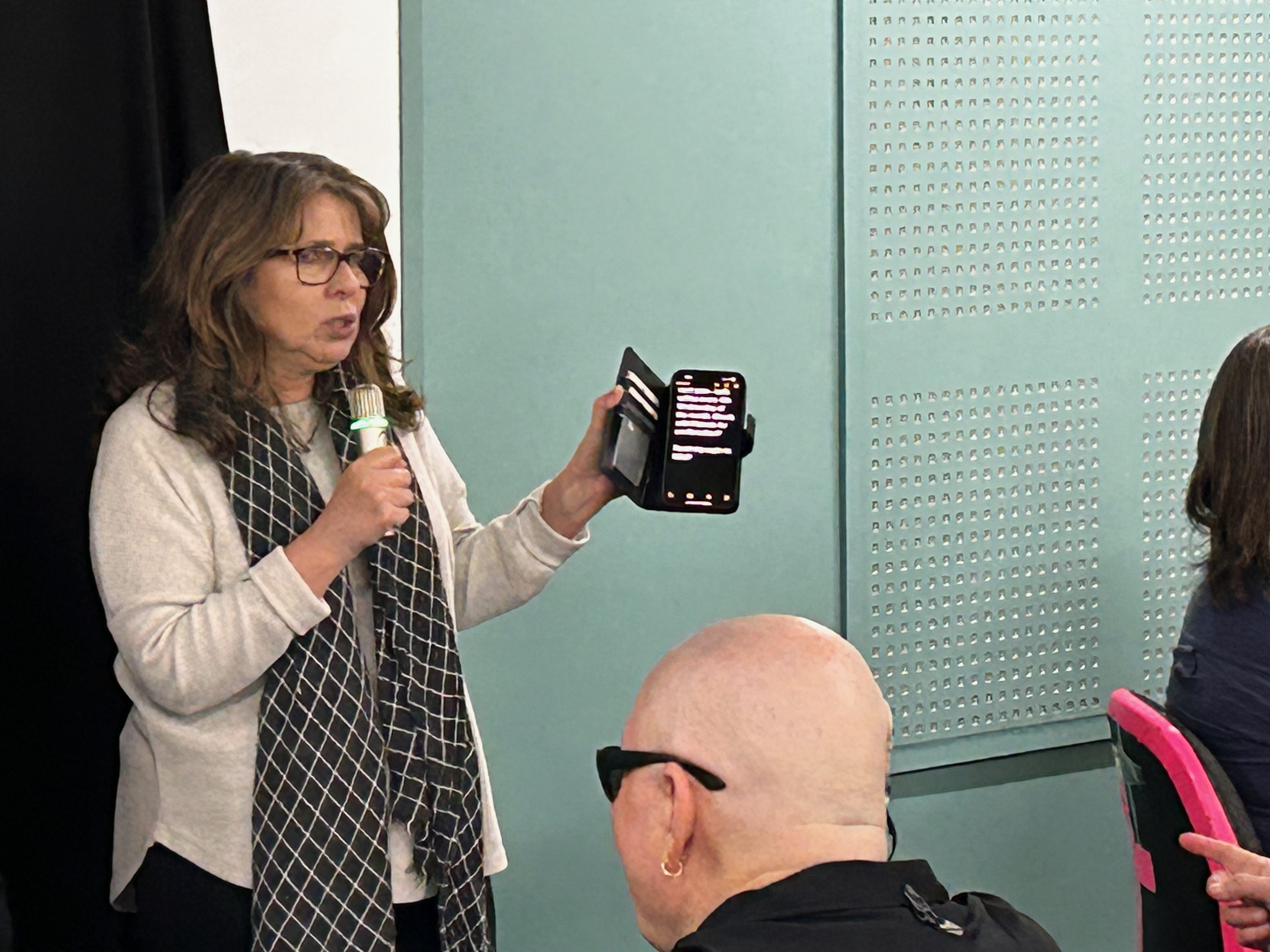
At Deafblind Café on 18/9/2024, members shared their own tips. Their strategies are diverse, as each person has a different level of hearing, some vision, speech and other abilities. Members learned about each other, and from each other. Sometimes we use tools, like sunglasses, a cane, hearing aids, and phones. Sometimes, we prefer to be without them. There’s no right or wrong way to do it! Here are some of the strategies members use to increase their communication independence, access and comfort:
One-on-one communication strategies
- Make communication cards with print and braille, with simple words and the
alphabet. Others can guide your finger to the words or letters. - If you can speak, tell the person how they can respond to you. e.g. “tap my shoulder
once for yes twice for no”. “trace block letters on my palm”. You can show them a
card with instructions on how to communicate too. - Set up two choices and ask the person “1 or 2?” E.g. “Where is this tram going? 1
for Brunswick or 2 for Fitzroy?”
Attitude
- Sometimes when you haven’t heard or understood, you might smile and fake it.
Maybe we need to be more assertive and tell the person we’re not following. - Don’t be shy to offer feedback back if a service is not accessible. Talk to the
manager.
Taxis and Uber
- When booking a taxi, let them know to expect a deafblind passenger. Get some
regular drivers who know you and are happy to share their direct contact number. - With Uber, write a note for the driver: “I’m blind, please approach me. I’m standing in
front of this building at this address.” It works 70% of the time.
Phones
- Use the notes app on your phone with high contrast and large print
- Braille display with phone (get the person to type on your phone). The Mantis Q40
(with a QWERTY keyboard) is easier because you don’t need to turn off Braille on
phone and open the screen keyboard – the person can just type on the keyboard. - Apps that members use to find the nearest public transport: moovit and transit.
Specific environments
- Prepare before going. Make notes you can use at places you go to frequently. You
can write your order down before going out to eat. - Bring a hospital communication card with things like food, pain, toilet, as well as your
Medicare number, allergies, etc. - At the pub, tell staff to turn down music.
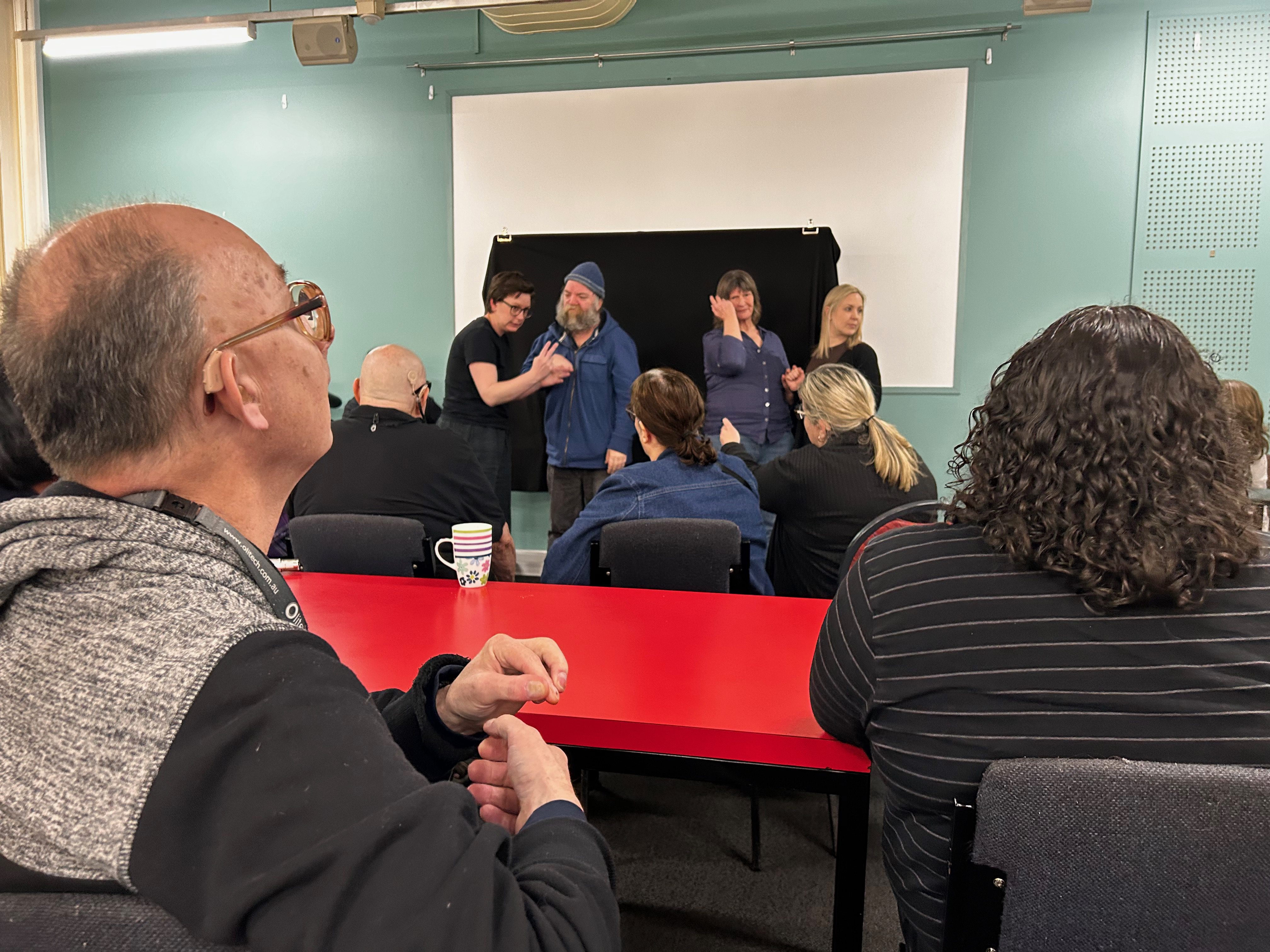
The Deafblind Café event was followed by a life-skills activity about communication independence. Members paired up to role-play communicating in a dark and noisy environment, like at
a restaurant or a busy train station. There were lots of laughs, miming and improvising
to get the point across. And hopefully some strategies learned! See feedback below.
Feedback
- Wow that was hard! Full respect for those who can’t see hear or speak at all. Daily
life must be a real challenge. - Really enjoyed the activity. Comedy mime. I don’t go in water alone because I’m not
comfortable without hearing aids, so I did a role play where I’m asking for directions
from the dressing room to the pool. - We are still learning new things from each other even after many years in the db
community! “Yes” or “no” taps on the hand is a great strategy. The activity showed
me how dependent we have become on technology and supports. I wonder if I
should carry communication cards with me eg “I’m deaf and blind. Please help me”.
Fantastic session. Thanks